
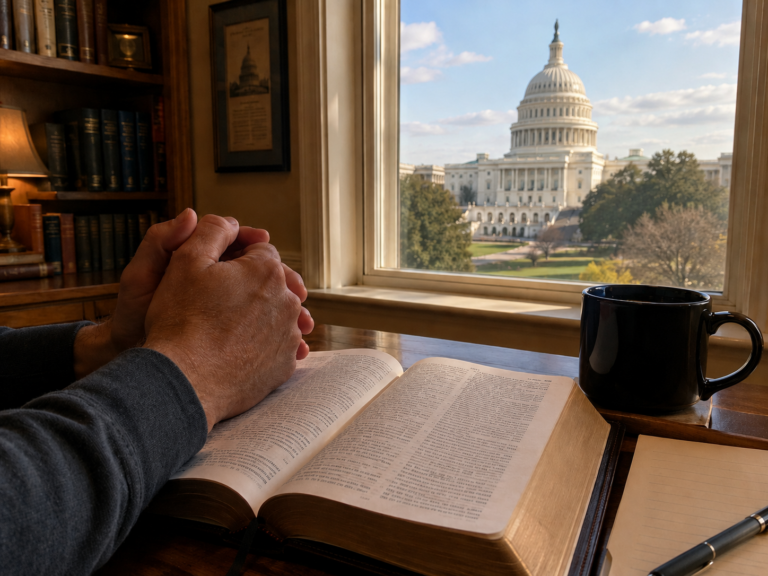
National repentance is not a political slogan, a sentimental longing for better days, or a substitute for the Gospel. It is a Biblical summons for God’s people to humble themselves, confess sin, return to the authority of Scripture, and proclaim the only hope for any nation: repentance and salvation through Jesus Christ. From Judah in Jeremiah’s day to America in times of national crisis, Scripture and history remind us that when a people forsake God, judgment follows; when they humble themselves before Him, mercy is still possible.
What Is National Repentance?
There are moments in the life of a nation when ordinary language is not strong enough. “Concern” is too weak. “Renewal” is too shallow. “Reform” is too political. The Biblical word is repentance.
Repentance is not mere regret. It is not sorrow over consequences, embarrassment over exposure, or fear of decline. True repentance is a Spirit-wrought turning from sin to the Living God. It is confession without excuse, humility without pretense, and obedience without negotiation.
For an individual, repentance means standing before the holiness of God and saying, “Against you, you only, have I sinned and done what is evil in your sight” (Psalm 51:4). For a nation, repentance means acknowledging that no military strength, economic prosperity, political philosophy, technological achievement, or cultural influence can shield a people who have forsaken the Lord.
America is not Israel, and the United States does not stand in the same covenantal relationship to God as Old Testament Israel. Yet every nation remains accountable to the Lord who judges peoples with righteousness. “The Lord reigns forever; he has established his throne for judgment. He rules the world in righteousness and judges the peoples with equity” (Psalm 9:7-8).
Scripture does not flatter nations. It tells the Truth. Nations rise and fall under the sovereign rule of Almighty God. “Blessed is the nation whose God is the Lord” (Psalm 33:12). But the opposite is also true: when a people forget God, their outward stability may remain for a season, but inward decay has already begun.
That is why the Church must recover the language of national repentance. Not vague spirituality. Not patriotic sentiment. Not moral outrage aimed only at unbelievers. Biblical repentance begins with the people of God.
2 Chronicles 7:14 and National Repentance
The most familiar passage on national repentance is 2 Chronicles 7:14:
“If my people, who are called by my name, will humble themselves and pray and seek my face and turn from their wicked ways, then I will hear from Heaven, and I will forgive their sin and will heal their land.”
This promise was given in the context of Solomon’s temple and God’s covenant dealings with Israel. It should not be detached from holiness, covenant accountability, or obedience. Yet it reveals a timeless Biblical principle: when God’s people humble themselves, pray, seek His face, and turn from wickedness, God delights to show mercy.
The order matters. God does not first address the pagan nations surrounding Israel. He says, “my people.” The first call is not to the halls of power, the marketplace, the academy, or the entertainment industry. The first call is to those who bear His name.
National repentance begins when God’s people stop excusing their compromise and return to Him in humility, prayer, and obedience.
This is a necessary word for America. A nation may be protected by oceans, defended by armies, enriched by commerce, and admired by the world, yet still be rotting within. A magnificent tree may appear strong from the outside while termites consume it from within. So it is with nations. External defenses cannot save a people from internal rebellion against God.
A Biblical Example of National Repentance: Judah’s Need to Return
The prophet Jeremiah gives us one of Scripture’s clearest pictures of national spiritual collapse. Judah had the temple. Judah had the law. Judah had the history of God’s mighty deliverance. Judah had received prophets, promises, and privileges beyond measure.
Yet privilege did not preserve the nation from judgment when the people turned from the Lord.
Jeremiah exposed the root of the crisis:
“My people have committed two sins: They have forsaken me, the spring of living water, and have dug their own cisterns, broken cisterns that cannot hold water” (Jeremiah 2:13).
That is the anatomy of national apostasy. First, a people forsake God. Then, they replace Him. They do not become neutral. They dig broken cisterns—leaky wells that can never hold the water of life—false sources of hope, wisdom, security, and salvation.
Judah’s collapse did not begin at the margins. It began among those who should have known better. Jeremiah 2:8 says, “The priests did not ask, ‘Where is the Lord?’ Those who deal with the law did not know me; the leaders rebelled against me. The prophets prophesied by Baal, following worthless idols.”
Religious leaders stopped seeking the Lord. Those entrusted with the law did not know Him. Civil leaders rebelled. Prophets spoke falsely. The result was not private failure only; it became national poison.
This is a severe mercy from Scripture. God shows us that national decline is not merely economic, military, educational, or political. It is spiritual. When the pulpit loses its courage, when leaders abandon righteousness, when prophets speak lies, and when the people prefer broken cisterns to the fountain of living water, judgment is already at the door.
Yet Jeremiah does not leave us without hope. In Lamentations 5:21, after devastation had become painfully visible, the prophet cried, “Restore us to yourself, Lord, that we may return; renew our days as of old.”
That is the cry of repentance. Not “restore our comfort” first. Not “restore our influence” first. Not “restore our prosperity” first. “Restore us to Yourself.”
That must be the Church’s cry in America: Lord, restore us to Yourself.
David and the Heart of True Repentance
Although David’s repentance was personal rather than national, it is indispensable for understanding the kind of repentance God receives. When Nathan confronted David after his sin with Bathsheba and Uriah, David did not argue. He did not blame circumstances. He did not hide behind royal privilege.
He said, “I have sinned against the Lord” (2 Samuel 12:13).
Psalm 51 shows us what was happening in David’s heart. His repentance was not cheap, fleeting, or merely emotional. It was genuine. It grieved over sin. It used the Biblical language of transgression, iniquity, and sin. It sought cleansing, restoration, and a renewed heart before God:
“Create in me a pure heart, O God, and renew a steadfast spirit within me” (Psalm 51:10).
This matters because nations are made up of people, and churches are made up of repentant—or unrepentant—hearts. A church that refuses personal repentance has no authority to call a nation to repentance.
National repentance without personal repentance becomes theater. But personal repentance that remains silent in the face of national sin becomes cowardice. God calls His people to both humility and witness.
The Church must therefore begin where David began: confession before a holy God. We must confess prayerlessness, compromise, fear of man, tolerance of false teaching, neglect of Scripture, and coldness toward the lost. Only then can we speak to the nation with spiritual integrity.
An American Example of National Repentance: Lincoln’s Call to Prayer and Fasting
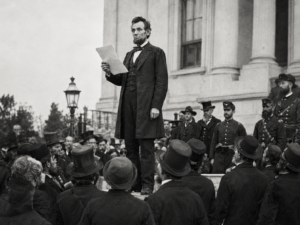
The United States has seen moments when national leaders publicly recognized the need for repentance before God. One of the clearest examples came during the Civil War.
On March 30, 1863, President Abraham Lincoln issued a proclamation appointing April 30, 1863, as “a day of national humiliation, fasting, and prayer.”
The nation was tearing itself apart. Bloodshed covered the land. Families were divided. The future of the Union was uncertain. Yet Lincoln’s proclamation did not merely call for military resolve or political unity. It called the nation to humble itself before God, confess national sins, and pray for clemency and forgiveness.
Lincoln recognized that nations, like individuals, are subject to the overruling power of God. He acknowledged that the blessings America had received had been forgotten and that the nation had become too proud to pray to the God who made it.
In a time of calamity, the call was not simply to strategy, unity, or victory. It was to humiliation before the Lord.
This does not mean every American was repentant. It does not mean the nation experienced complete spiritual renewal. Nor does it mean America occupies the same covenantal position as Old Testament Israel.
But Lincoln’s proclamation remains a sobering illustration: in a time of national crisis, America’s need was recognized not merely as political or military, but spiritual. That lesson must not be lost on the Church today.
Why National Repentance Must Begin with the Church
The Church must not call America to repent while refusing repentance herself. Judgment begins with the household of God (1 Peter 4:17). Before we condemn the darkness, we must ask whether our own lamps are burning brightly.
Have we believed the inerrant Word of God, or have we treated Scripture as something to be edited by cultural opinion? Have we proclaimed the deity of Christ, His atoning death, His bodily resurrection, and His coming judgment, or have we softened the Gospel to avoid offense? Have we loved the lost enough to call them to repentance and faith, or have we hidden behind comfort and respectability?
National repentance begins when God’s people humble themselves. It begins when pastors preach the whole counsel of God. It begins when families recover worship, prayer, and obedience. It begins when believers mourn over sin more than they mourn over lost influence.
It begins when the Church says, “Restore us to Yourself, Lord.”
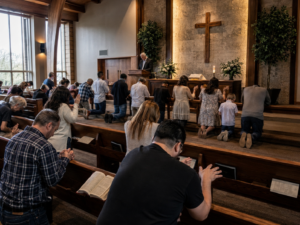
National Repentance and Gospel Proclamation
The ultimate need of any nation is not merely moral improvement. The ultimate need is the Gospel of Jesus Christ.
A nation cannot be healed by nostalgia. It cannot be saved by political power. It cannot be redeemed by religious ritual. Sinners must be reconciled to God through the crucified and risen Lord Jesus Christ.
This is why the Church must never separate national repentance from Gospel proclamation and discipleship. We are not calling America merely to become more respectable. We are calling men and women to repent of sin and believe in the Lord Jesus Christ.
“Salvation is found in no one else” (Acts 4:12). Jesus Christ is not one hope among many. He is the Way, the Truth, and the Life (John 14:6).
But a call for national repentance is not a substitute for evangelism. It must fuel evangelism. A repentant Church becomes a proclaiming Church. A humbled Church becomes a bold Church. A praying Church becomes a missionary Church.
When believers are restored to the Lord, they cannot remain silent about the Savior.
America does not need a vague return to religion. America needs the Living God. America needs churches aflame with Biblical Truth. America needs pastors who preach the whole counsel of God. America needs families who recover worship, prayer, and obedience. America needs believers who speak the Truth in love and proclaim without shame: Christ has died, Christ is risen, Christ will come again.
The Church must pray with Jeremiah, repent like David, heed the warning of 2 Chronicles 7, and proclaim Christ with apostolic boldness.
We must stop blaming the darkness while hiding our own compromise. We must stop longing for cultural comfort while neglecting Gospel faithfulness. We must humble ourselves under the mighty hand of God.
And because God is merciful, repentance is not despair. It is hope. The God who wounds also heals. The God who judges also forgives. The God who calls sinners to repentance has provided a Savior.
So let this be our prayer:
O Lord, restore us to Yourself. Renew our days as of old. Awaken Your Church. Save the lost. Have mercy on this nation. Make us faithful witnesses. And keep us steadfast until the day Jesus Christ returns in power and glory.
There are over 500,000 believers interceding for our nation
Share
Recent MY Journal

Uncovering the Islamist Strategy for Domination
October 11, 2026

First Large-Scale Navigator Shipment Reaches the Middle East
October 9, 2026
Sign Up for Ministry Updates
You might also like

America
I Fled Socialism. I Know What Comes Next
September 8, 2026

America
AWAKE: Revival That Leads to Gospel Mission
July 11, 2026